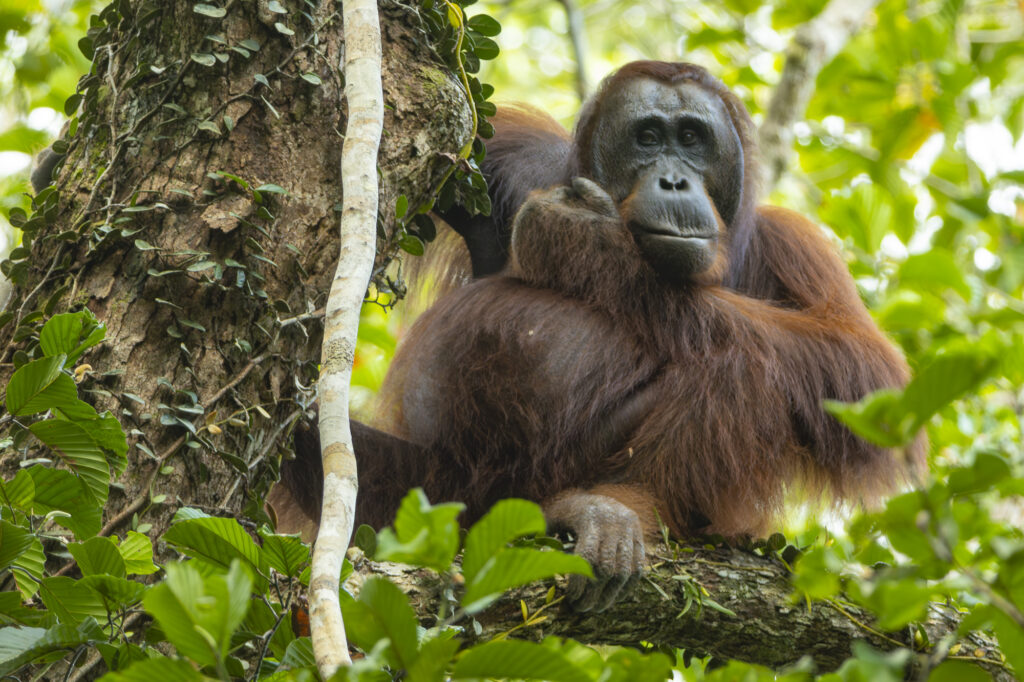
I’ve been going to Borneo’s Gunung Palung National Park for a long time. I first went as a research assistant in 1987, did my PhD research there in the early 90’s, and have returned nearly every year since, working alongside my wife Cheryl Knott and her orangutan research team, photographing and filming the stories of GP’s orangutans and other wildlife. The amazing thing is that even after nearly forty years, every visit brings some new revelation. I was there for a short trip this July, and this trip was no exception.
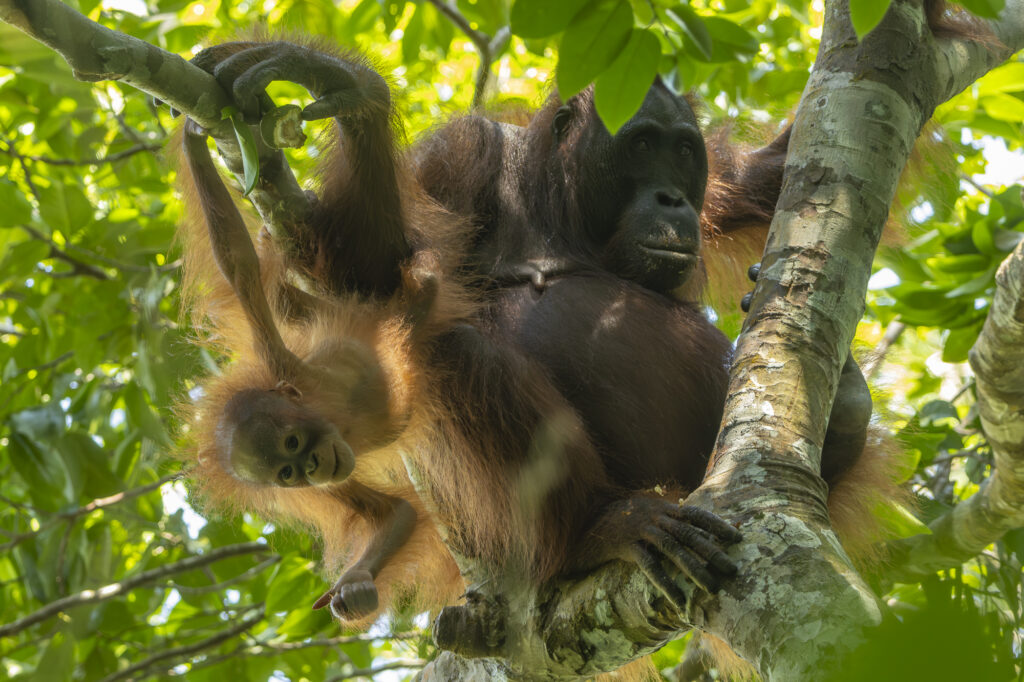
As the unofficial photographer for the National Park as well as the GP Orangutan Project, park Director Pak Anto had asked me to try to capture some fresh images of new baby orangutans that had been born since last year’s mast fruiting event, especially a youngster named Kibar that he had had the honor or naming. Despite being on a short personal visit, I had great luck, and the team located Kibar, traveling with her mom Kabar and older brother King, a few days after I arrived. I was excited to be able to capture some nice images of this playful youngster.
The highlight of my visit however, happened when the male named Tunjuk passed right by the camp one afternoon while I was there downloading my photos from the morning. I hadn’t seen Tunjuk before – a younger male, who had been unflanged for many years, but now was starting to develop his cheek flanges. Excited by the chance to photograph this male in the rare transitional stage, I grabbed my gear again and started following him with the crew. What transpired over the rest of the afternoon was one of the most direct glimpses into the mind of a wild orangutan that I have experienced.
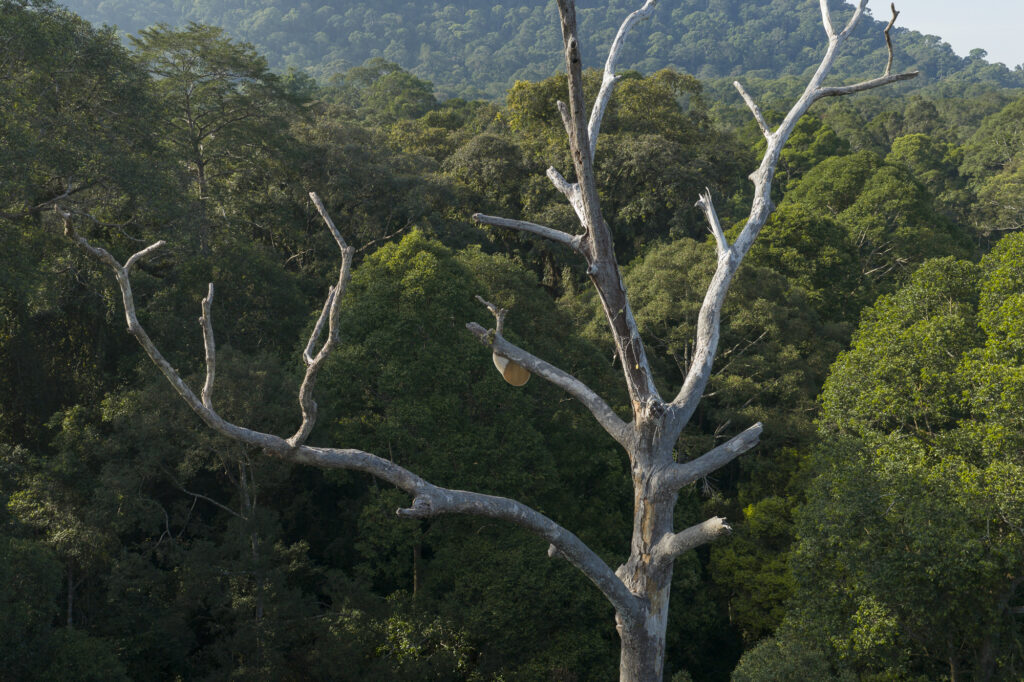
After a brief feeding session in a Dipterocarpus tree near the river edge, Tunjuk crossed the tree crowns bridging the river and “hung out” for a long time in one tree. We had clear view of him from the riverbank below and soon realized that he was staring in the direction of a big dead tree which had shed all its bark and most of its branches. What was of interest there? Finding a gap through the foliage, we spotted a massive hive of the giant Asian honeybee, hanging below a dead branch. Was Tunjuk thinking about trying to reach this hive?
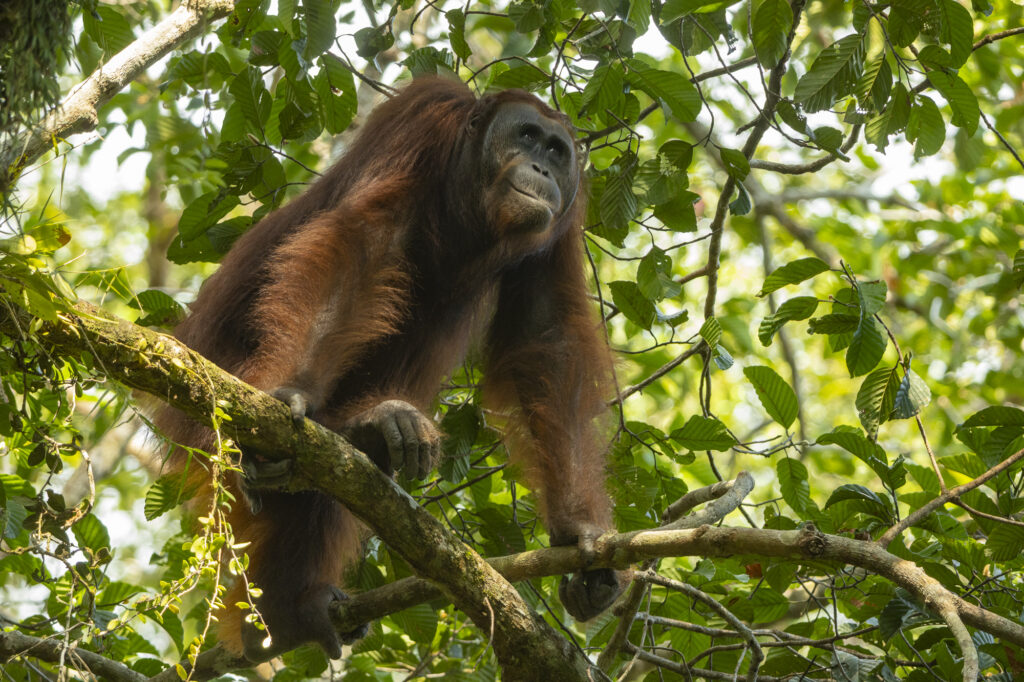
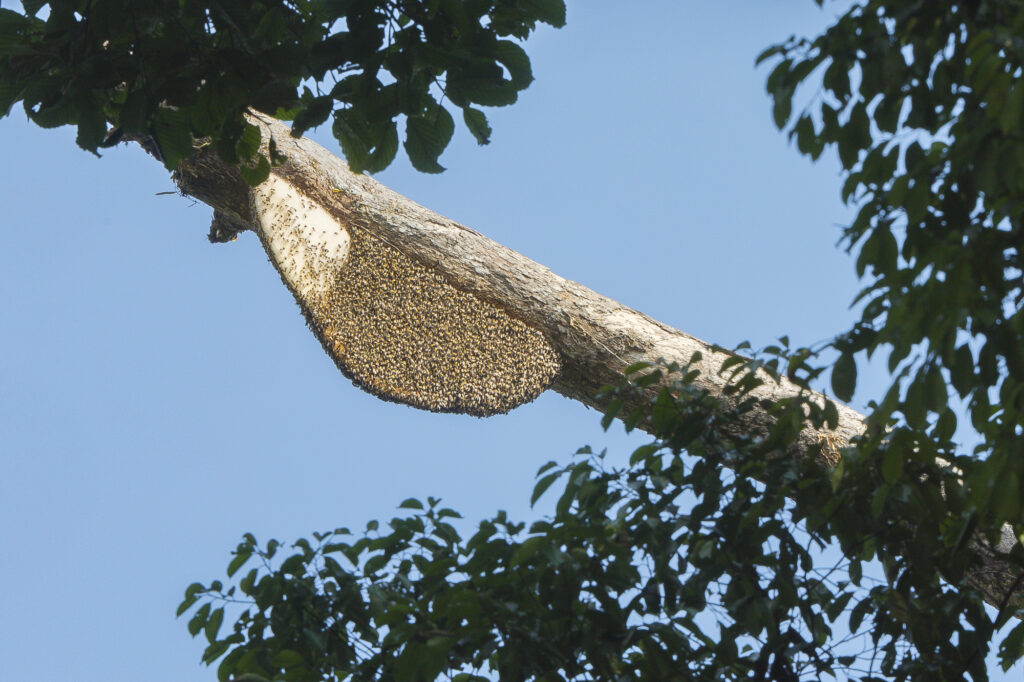
He spent considerable time looking up, perhaps thinking about this beehive and how to get to it. The research team have recorded orangutans feeding on small wasp nests on many occasions. The nutrient rich larvae are no doubt the attraction in those nests, and we have seen orangutans sustain many stings to enjoy these delicacies. But was Tunjuk really thinking about attacking a massive hive of Asian honeybees? Did he have experience and know what he was getting into? Was he after larvae or honey or both? We have never recorded an orangutan feeding on a giant Asian honeybee nest, so this was going to be interesting.
Tunjuk now took a little rest to think about it further. Yes, I’m projecting a human thought process onto this orangutan, but if you keep reading, you will see that the way things unfolded over the rest of the afternoon, it’s hard to escape the conclusion that Tunjuk had honey on his mind.
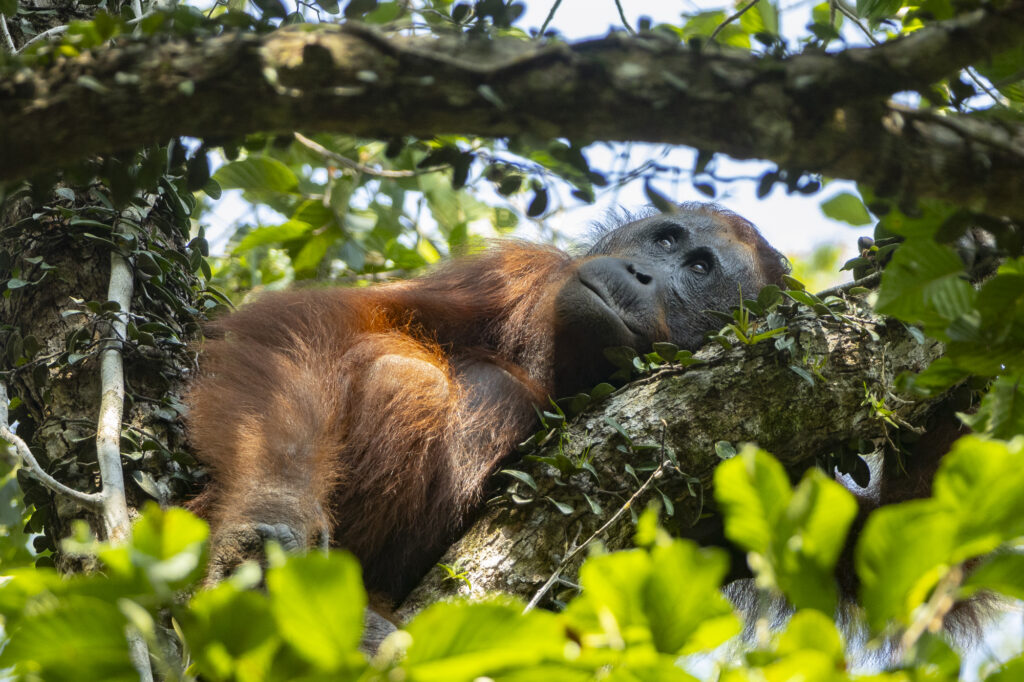
He then got up and moved toward the honey tree, but there were no trees whose crowns came very close to the trunk of this dead tree. He climbed into the closest smaller tree in the mid-story of the forest, and tried the “tree swaying” technique, using his body weight to try to bend the tree over so he could climb onto the honey tree. But he failed. The tree he was in was too stiff. He looked up toward the beehive for a while. Then apparently giving up, he moved off to the west, leaving the tree behind. Was he done with honey for the day?
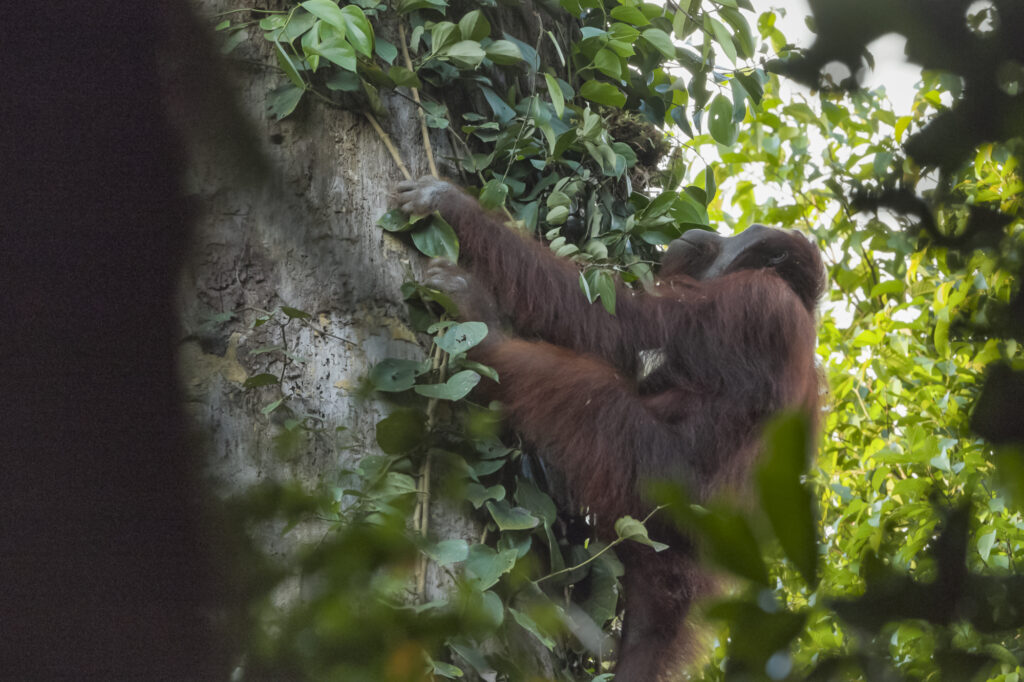
He travelled west for a while, stopping to rip open a termite nest up in a tree and feed there, and then carried on until we saw him climb very high in the canopy of a large emergent dipterocarp tree where he could clearly get a view across the forest. What was he looking for? He then descended to the lower canopy – a favorite level for travel where many trees are interconnected – and made a beeline to the southwest. We bashed our way through the undergrowth, wondering where he was heading with such determination. Then suddenly, I saw that he had stopped at another large dead snag. This one had small trees near it, and he had already transferred to the trunk, grasping some slender lianas hanging there. I immediately had the thought that he must have come to another honey tree. Sure enough, we found a gap looking up, and there hanging below a high branch was another hive of giant Asian honeybees!
Tunjuk clearly had honey on his mind! It was so apparent that having failed at honey tree number one, he had purposely sought out this second tree, that he either remembered or had spotted from his high viewpoint. But could he make it up this one? Yes, he was on the trunk, but the lianas seemed too small to hold his weight. He tested them but they were pulling loose. He tried to bear-hug the tree to climb it that way, but it was too big. After several minutes precariously perched on the side of this huge dead tree, he again gave up and dropped back into a small tree nearby. It was the first time I have seen an orangutan try to climb a tree and fail.
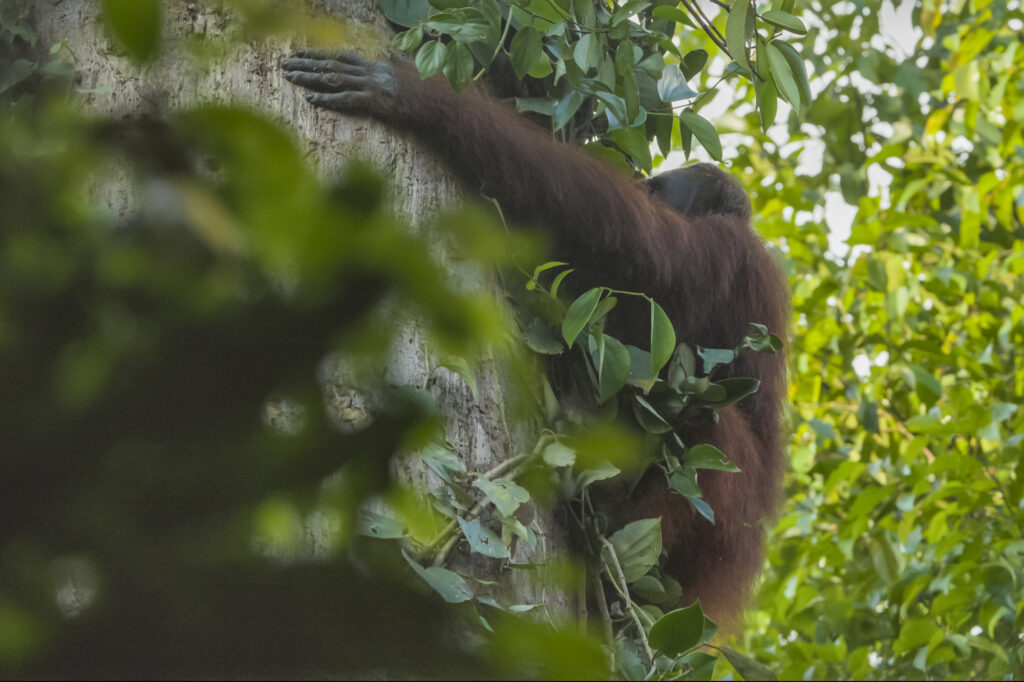
The score at the end of the day: Bees 2, Orangutans 0. It turns out the bees know what they are doing in terms of putting their nests in places that even large orangutans can’t access. Of course, we shouldn’t go too far in projecting our human thought processes on orangutans when interpreting their behavior, but this series of events was so human-like that I couldn’t help it. It was as if you had your heart set on eating sushi, but the first Japanese restaurant you went to was closed, so you drove all the way across town to go to find another one. Again, maybe we were projecting our human emotions on him, but as he sat there in a small crotch below the honey tree looking up, he looked dejected. After sitting there for some time, he moved off a few meters and built a nest right in the open and lay down, right beneath the honey tree, looking up. We joked that he was going to spend the night dreaming of honey.